The History Anorak

The History Anorak

Sunday, 11 October 2015

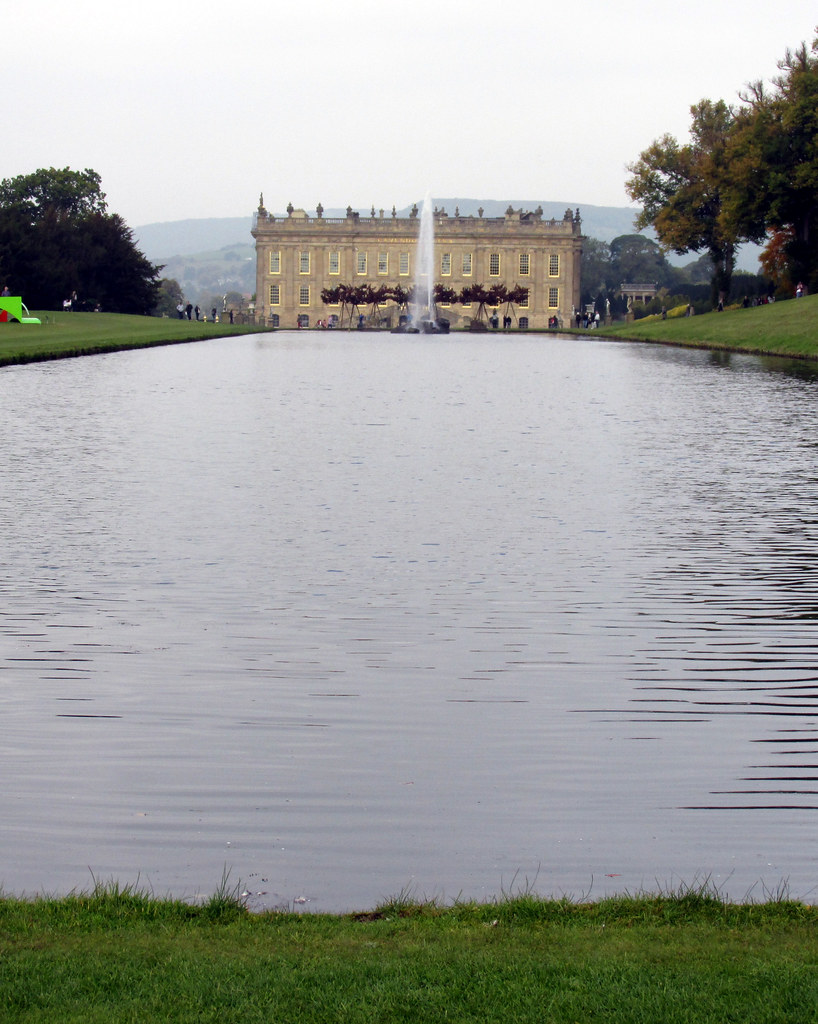
Chatsworth

Looking towards the Emperor Fountain
A couple of weeks ago I went to Chatsworth. My main intention was to visit the Beyond Limits sculpture exhibition in the grounds, but I had a trip round the house as well.  Here's a potted history. Be warned - it's a long post, even though I've hardly scratched the surface of all this house has experienced!

One of the most powerful women in Elizabethan England (after the Queen) was Elizabeth Talbot, known as Bess of Hardwick. Her four successful marriages also made her one of the richest women of the time.

Husband number two was Sir William Cavendish, a Suffolk lord who benefited immensely from Henry VIII's dissolution of the monasteries. When he married Bess in 1547 she persuaded him to sell off his East Anglian properties and move to her native Derbyshire. That's how the Chatsworth estate was established. Since then the estate has passed through 16 generations of the Cavendish family.
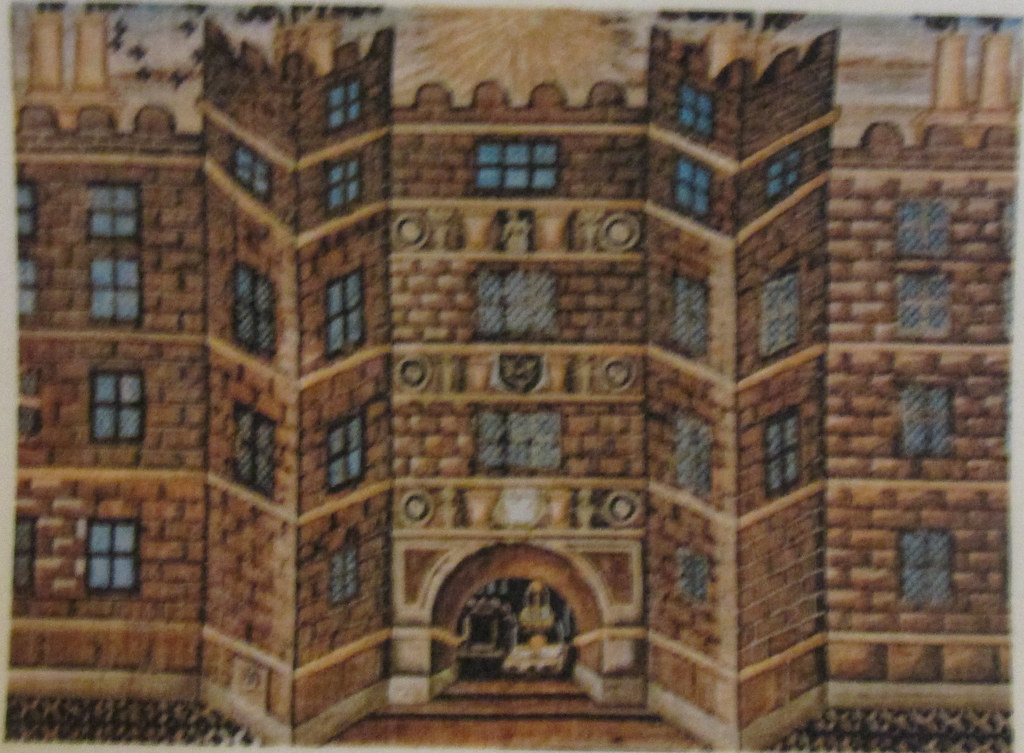
The house that Bess built
Bess's fourth husband was Earl of Shrewsbury George Talbot, who was appointed custodian of Mary, Queen of Scots by Elizabeth I. As a result Mary was held prisoner at Chatsworth for several periods during her incarceration.

Bess's second son, William, was made her heir and on her death in 1608 he inherited her vast fortune, including land in Nottinghamshire, Derbyshire and Virginia in the USA. He was made Earl of Devonshire in 1618.

During the English Civil War the house changed hands several times but returned to the Cavendish family after the Restoration of the monarch when the third earl -another William - moved back in.

Various Cavendish heirs were involved in significant events, such as the fourth earl (want to guess his name?) being one of the seven noblemen who supported the establishment of William of Orange as king. In exchange ther fourth earl became the First Duke of Devonshire.

Successive dukes made the right political decisions as kings came and went, amassing even more money and power and enabling them to modernise Bess's original Elizabethan building. The fourth duke made changes to Chatsworth park, demolishing the neighbouring village of Edensor (because it was in the way) and employing Lancelot Capability Brown to create the surroundings as they exist today.

In 1774 the fifth duke married Lady Georgiana Spencer, daughter of the 1st Earl Spencer. (Yes, that family which later gave rise to Lady Diana; mother of the current second in line to the UK throne.)

It wasn't just the direct line of dukes and earls who were successful. Henry Cavendish, grandson of the second Duke of Devonshire, was a scientist who first recognised hydrogen as an element.  Much of his library of 12,000 books and papers is now at Chatsworth.

An inhabitant of the sculpture gallery
The sixth duke - yes I know this is getting silly but he was called William - never married, but he spent a lot of time and money extending the house. His changes included the installation of a purpose-built sculpture gallery and the famous Joseph Paxton developments: the massive rock gardens, the impressive Great Conservatory and the spectacular Emperor Fountain. The works were expensive and he was forced to sell off land in Yorkshire to pay for them. On his death in 1858 the house and land passed to William's cousin - William.

William the seventh duke was the clever one of the family. He was made Chancellor of London University at the ripe old age of 28, then Chancellor of Cambridge University, and he founded the Cavendish Laboratory there.

During World War II Chatsworth was used by a girls' boarding school to keep its pupils safe from coastal bombing. In 1949 the house opened to visitors and 105,000 people turned up in the first year. a year later the duke died unexpectedly and 80% death duties forced the family to sell off many of the artworks and to hand over Hardwick Hall - Bess's old home - to the National Trust in lieu of taxes.

The eleventh duke - Andrew! - married Deborah Mitford, one of the famous Mitford sisters who earned a degree of notoriety for their links to Hitler's Germany.

The current duke is the twelfth, who took over on the death of his father in 2004. The family are keen art and sculpture collectors and their modern pieces sit happily alongside the amassed treasures collected by previous owners.


Thursday, 1 October 2015

Scarborough Castle

The seaside town of Scarborough has two bays and they are separated by a prominent, rocky headland. On top of the cliff stand the remains of a castle.  Having grown up near the town that castle has been an iconic image for me for many years, although it is decades since I saw it close up. So on our latest trip to the town we put that right.

The earliest evidence of settlement of the headland dates from the Bronze Age. It probably consisted of a group of small houses, forming a farmstead where livestock could be grazed. It's difficult to say for sure how far the settlement extended because a large part of the cliff has fallen away through coastal erosion over the centuries.

Signal station site
Similarly there is not much of the Roman signal station remaining. A 1920s excavation revealed the base of a square tower standing inside a courtyard. Nearby a well provided the site with water. The beacon was one of a string along the north east coast that enabled Roman legions to stay in contact and warn of potential attacks from the sea.

They eventually came from the North in the form of Viking hordes who arrived in the 10th century. In fact Scarborough was founded in 966 by the Viking Skarde who gave it its original name - Skardeburg.

There was a very early Norman wooden castle on the headland, built by William Le Gros, grand-nephew of William the Conquerer but thta had disappeared by the time of Henry II who rebuilt a stone structure. Richard I ignored the place while he went off on his Crusades, but his brother King John invested a great deal of money in it so he could use Scarborough as a base while he sorted out the northern barons. Other kings, including Henry III and Edward I were also fond of the place and maintained it. Even Richard III spent time there (before losing his horse and his kingdom in Leicestershire)

During the Civil War it was held as a Royalist stronghold by Sir Hugh Cholmley (after he swapped sides), but fell, after a siege, to Parliamentarian troops. In fact the castle changed hands several times between 1642 and 1648, not always as a result of battle, and eventually became a prison run by Cromwell's forces, to house enemies of the Commonwealth.

It was a prison for quite some time and among its inmates was George Fox, founder of the Society of Friends (Quakers), who spent a year there on the orders of Charles II.

In December 1914 a German battle fleet sailed along the Yorkshire coast and staged an attack on Scarborough that killed 19 people. It also caused considerable damage to the town, including to the castle keep and the lighthouse.

In WWII it was rumoured to house a military listening post.  It's an open secret that there's still something similar on the outskirts of the town.