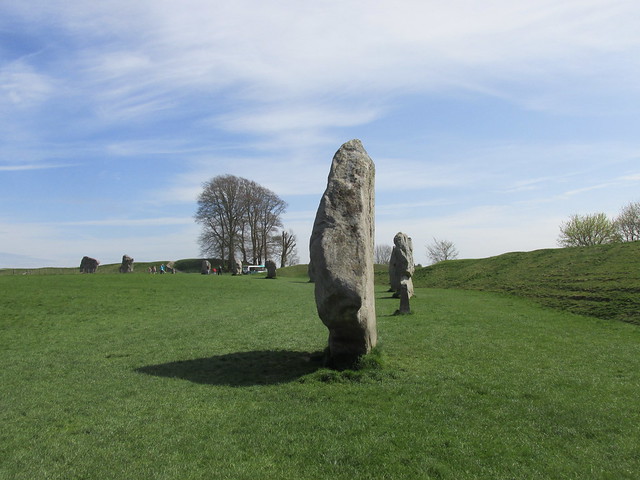
Avebury stone circle is big. Not big like Hitch Hiker's Guide space, big, but big, nevertheless. Depending on your source it's described as either Europe's or the World's largest stone circle. It's certainly big enough to enclose a village.
It's also a fascinating site. It's a henge, that is a ditch and bank structure, and the large circle includes two smaller ones. The whole is part of a much more extensive prehistoric landscape that incorporates the magnificent Silbury Hill and West Kennet long barrow, with a couple of avenues thrown in for good measure.
Avebury circle dates from somewhere between 3,000 and 2,000 BCE and encloses an area of 28.5 acres (11.5 hectares). While its actual stones are not as impressive as the trilithons at Stonehenge, its sheer size makes it stunning.
There is very little additional evidence associated with the circle, just lots of stones, many of which were flat at the start of the 20th century and restored to their upright positions by marmalade heir Alexander Keiller who bought a huge chunk of village land so he could excavate it. John Aubrey (
the man with the 'holes') and William Stukeley both surveyed it at some point in the 17th century and their records show it in a better state than Keiller found it. (Sites where original stones are missing are marked with concrete posts.)
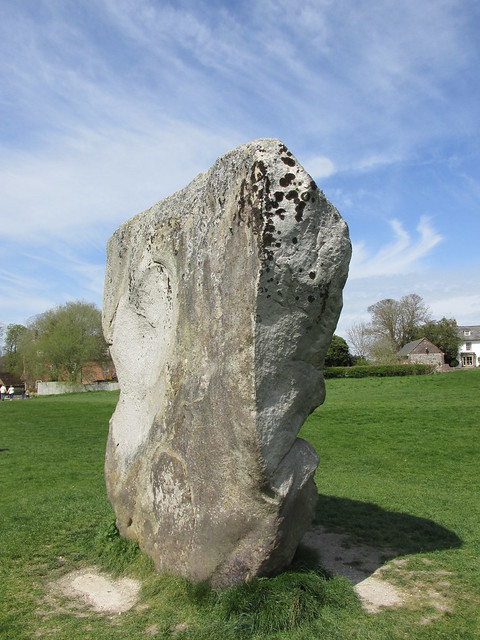
The lack of accompanying finds means the exact date of use for Avebury is hard to fix. It has been suggested that some construction could date from as early as late Mesolithic, but Neolithic is more likely. What finds do exist are mainly from that time, and the later Neolithic is when most of the big stone circles across Britain were built. Avebury's construction almost certainly took place over many years and in many stages. Archaeologists disagree over the details.
Time was when The Anorak would make a detour to visit the circle from anywhere within a 50 mile radius, and it was good. Spend a little time communing with the stones, taking part in that archaeological niche activity - molehill kicking - and then browsing an esoteric shop or two before dropping in to the Red Lion for lunch and then heading on my journey an hour or two later.
But it won't be happening again. During a recent return from the West Country we made the accustomed wander off the direct route to take a look around the village. Anorak's Other Half had never seen the place and so it was time to put that right.
Thanks to the National Trust (I assume in negotiation with the villagers) there is now no parking for non-residents except an official car park a few hundred yards outside the circle. (NT and English Heritage own and manage the place jointly.) And there it will cost you £7 to park - regardless of how long you plan to stay. That's all well and good if you want to be there all day, but we didn't. We left in a huff and parked at the pub, where we enjoyed a very good lunch before making an extremely brief trip around only a quarter of the circle. There was no time to do anything else.
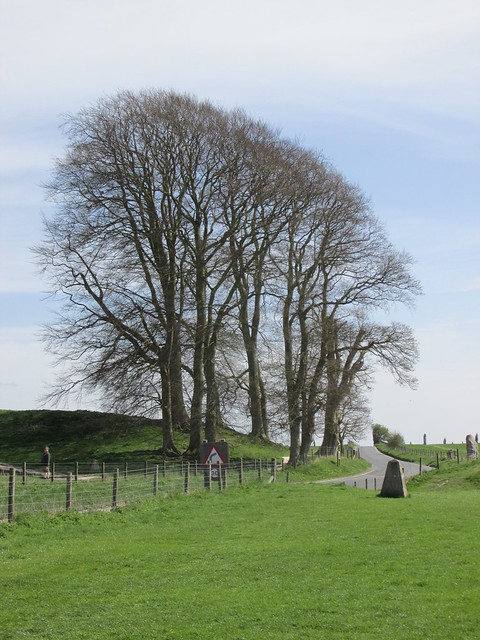 |
One of the concrete posts marking an
original stone site |
Incidentally, we weren't the only people to drive away in disgust. NT/EH you need to review your policy here!
OK, I get that historic sites need to be maintained and the damage caused by lots of feet walking over the grass is considerable. I understand that. But why just the one price to park? What about £2 an hour up to a maximum of £10? That would give the £7 price bracket 3 to 4 hours; probably plenty for the majority of visitors.
On the day in question you lost £28 revenue that I know of. And those people would have paid at least £2 each under my system. So that's £8 minimum you COULD have had - maybe even £16. But you got nothing.
On the other hand, dear reader, if you've never been to Avebury it's worth your while and worth £7 for the parking. I'm lucky. I have been several times, and even stayed overnight in the Red Lion once. ("The only pub in the world inside a stone circle!" their ads will tell you.) So I'm unlikely to want to stay all day ever again. And now I'm not likely to make a short visit again either.